%3Aformat(webp)%2Fheader_media%2Fed27e01d-e5af-495c-b81e-736176e52cb0-pexels-sanket-sawale-62949595-30358327.jpg&w=1920&q=75)
Discover the Astronomical Wonders of Jantar Mantar in Jaipur
Step into a place where science, architecture, and imagination come together under the Rajasthani sun.
Information about Astronomical Wonders of Jantar Mantar in Jaipur
At the heart of Jaipur lies Jantar Mantar, a monumental observatory built in the 18th century by Maharaja Jai Singh II, who combined his passion for astronomy with extraordinary architectural vision. Recognized as a UNESCO World Heritage Site, the complex is home to 19 gigantic instruments—stone and marble constructions designed to measure time, predict eclipses, and track the movements of stars and planets with remarkable precision. Standing before the world’s largest stone sundial, you sense the audacity of a ruler who sought to align his kingdom with the cosmos. What we like about Jantar Mantar Jaipur is how its sculptural beauty transforms scientific instruments into works of art, inviting travelers to marvel at both human ingenuity and the universe itself. With Viventura, you’ll explore these colossal instruments with expert guidance, learning not just how they worked, but why they mattered in the rhythm of Jaipur’s royal past.
Interesting facts about Astronomical Wonders of Jantar Mantar in Jaipur
Built by Maharaja Jai Singh II
Features 19 giant instruments
World’s largest stone sundial
UNESCO World Heritage Site
Pictures of Astronomical Wonders of Jantar Mantar in Jaipur
%3Aformat(webp)%2F5e5d214d-9092-461d-9d59-ccc941ffc91b-img20260211150606.jpg&w=1920&q=75)
%3Aformat(webp)%2F8f720d1e-1dd1-4850-95ba-e85ef3752f52-dsc03172.jpg&w=1920&q=75)
%3Aformat(webp)%2Ftravel_report_photo%2F95763%2F86f361ad-31ec-42b5-8a73-00c981ec6d7e-0EED93BD-C77E-4B25-B013-7D16ECC92F67.jpeg&w=1920&q=75)
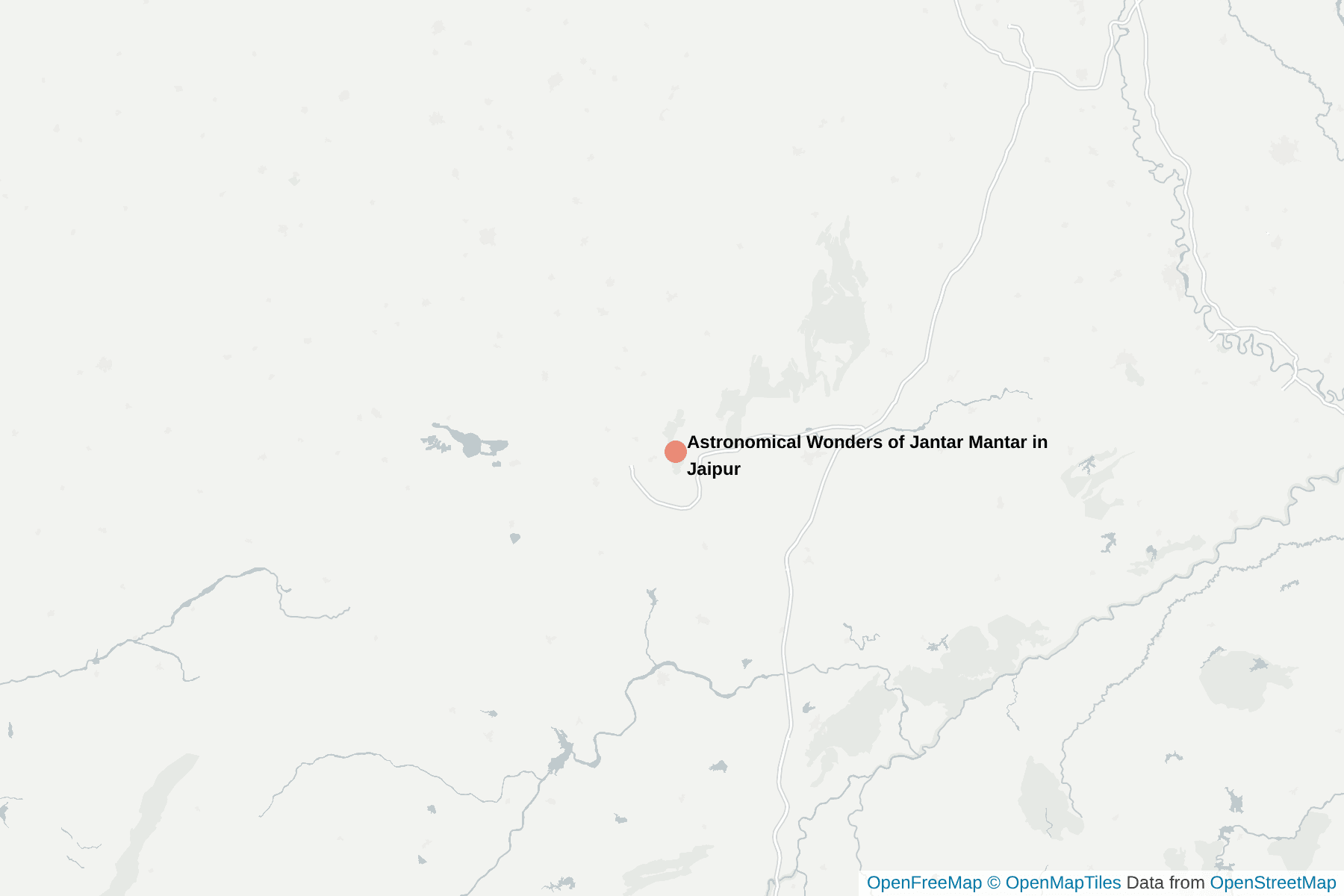
Où est Astronomical Wonders of Jantar Mantar in Jaipur
%3Aformat(webp)%2Fday_detail%2F855f2976-011d-4d9d-88ff-336f3383b4c3-pxl_20250601_121719584.raw-01.mp.cover.jpg&w=1920&q=75)
%3Aformat(webp)%2Fheader_media%2F3ac04840-9142-4432-b580-dfc3afb71eea-dsc03245.jpg&w=1920&q=75)
%3Aformat(webp)%2Fheader_media%2Fa41bfa9d-6101-4bc6-a8fc-2b3fa09f8a95-juliealexander-ancient-2149176.jpg&w=1920&q=75)
%3Aformat(webp)%2Fday_detail%2Fd5f3c3f7-2876-4dfb-adb8-615cad3b41e2-galta-ji-temple2.jpg&w=1920&q=75)
%3Aformat(webp)%2Fday_detail%2Fe019c7f9-5bbe-4111-a70a-886bf9ba32a5-pexels-preetam-priyabrat-2584620-4476397.jpg&w=1920&q=75)
%3Aformat(webp)%2Ftravel_report_photo%2F95899%2F28c385d7-357d-4359-9f52-4e2828afa69e-71d9591d-da39-4fbe-867d-da4b3290dc43.jpeg&w=1920&q=75)
%3Aformat(webp)%2Fpage_builder%2Fea862407-c0d5-4d99-9b10-0638639ba958-pexels-mithulvarshan-8156645.jpg&w=1920&q=75)