%3Aformat(webp)%2Fheader_media%2F8d414860-9b80-41d3-aaba-86eb60f40f64-img_6928.jpeg&w=1920&q=75)
Climb a Palmyra Palm at Dawn - Taste the Sweet Sap of Sri Lanka's Living Tradition
In the soft light of early morning, a climber ascends a towering palm, clay pot in hand, to collect nectar that becomes toddy - a living tradition of sweetness and skill.
Information about Toddy tapping and palmyra jaggery
In the golden light of dawn, a skilled toddy tapper shimmies up a palmyra palm, a clay pot balanced against his hip. With a practiced slice, sap drips into the container — sweet, milky, alive with wild yeast and the promise of fermentation. Given time, the nectar becomes toddy, mildly alcoholic, or brewed further into arrack. Boiled in iron cauldrons, the same sap crystallizes into jaggery — golden-brown blocks that sweeten Sri Lankan sweets for centuries. What we like about this association is the alchemy of palm into sugar — and with Karmaventura, you watch the process, cup the warm sap in your hands, and taste the soul of the tropics.
Interesting facts about Toddy tapping and palmyra jaggery
Sap from 30 metres up — Toddy tappers climb towering palmyra trees freehand, harvesting sap from the flower stem twice a day.
Fresh toddy is sweet and fizzy — The slightly fizzy nectar is alive with wild yeast and can ferment into palm wine.
Palmyrah jaggery: sunshine gold — Boiled down in large iron vats, the sap crystallizes into blocks sold in Sri Lankan markets for generations.
An island skill at risk — With younger generations abandoning the trade, toddy tapping is a dying art — tasting it fresh from the tree is a rare sensory experience.
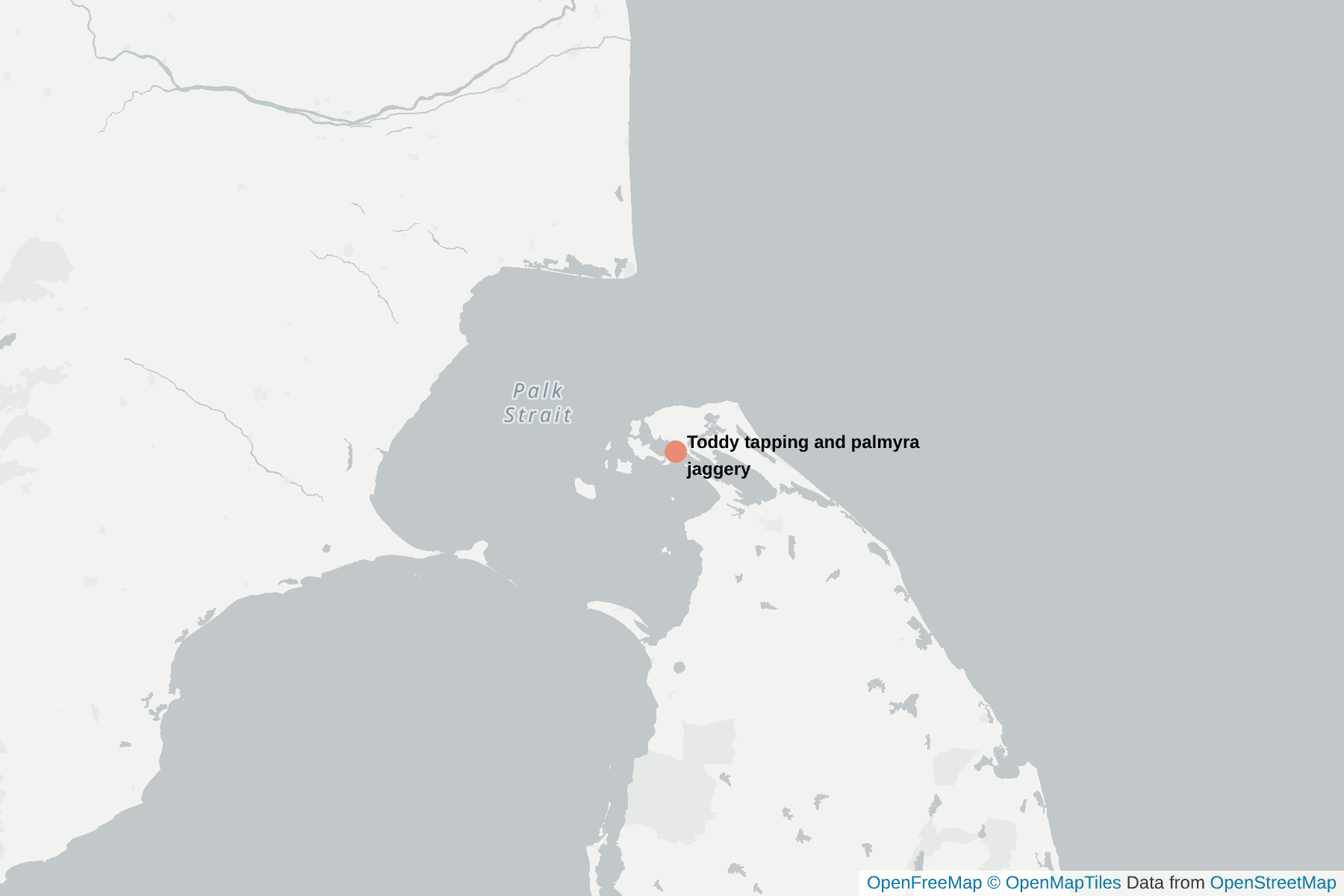
Où est Toddy tapping and palmyra jaggery
Possible Activities in Toddy tapping and palmyra jaggery

City tour
%3Aformat(webp)%2Fday_detail%2F64d955cf-677c-4df3-a46d-8cc942e7c1fb-eshan-malaviarachchi-z3xo2b2db7q-unsplash.jpg&w=1920&q=75)
%3Aformat(webp)%2Fday_detail%2F7850f82d-d885-485e-95a0-400ac6b22690-3170478-jaffna-1771973.jpg&w=1920&q=75)
%3Aformat(webp)%2Fday_detail%2F3a8e4ec2-3f4b-440b-ac68-3c0679060a06-nawartha-nirmal-azmbs0kngq8-unsplash.jpg&w=1920&q=75)