%3Aformat(webp)%2Fdestination%2F6de3bd1f-72ad-4a21-8f9a-a1f7eda1a9bc-tezpur.jpg&w=1920&q=75)
India isn't one climate but a whole subcontinent of them, so the honest answer to "when should I go?" is: it depends where you're headed. As a rule of thumb, October to March is the golden window for most first-time trips, with crisp, dry days across the north and warm sunshine on the coasts. Here's how the year unfolds, month by month, so you can match your travel dates to the India you most want to see.
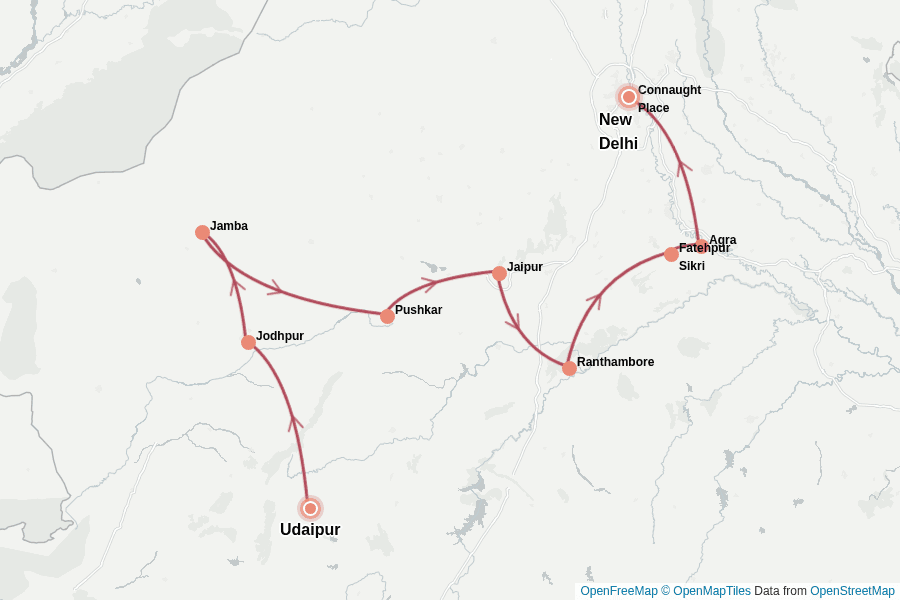
For the classic Golden Triangle (Delhi, Agra, Jaipur), Rajasthan and the wider north, aim for November to February when days are sunny and comfortable and evenings cool.
For the beaches and backwaters of the south (Goa, Kerala, Tamil Nadu), the same winter months are glorious. For the Himalaya and high desert of Ladakh, flip the calendar entirely and travel June to September, when the mountain passes are open and the plains are too hot for comfort.
%3Aformat(webp)%2Fdestination%2F93b43075-3292-49af-afca-3874d9192808-majuli-satra.jpg&w=1920&q=75)
This is India at its most forgiving. Northern cities enjoy clear blue skies and shirtsleeve days, though mornings can be genuinely chilly and the odd foggy dawn is common in December and January.
The trade-off is crowds and higher prices around Christmas, New Year and Diwali, so book well ahead if you're travelling then.
%3Aformat(webp)%2Fdestination%2F0d5abc90-23a5-4b59-8c21-0f5428c8d359-sualkuchi.jpg&w=1920&q=75)
March is a lovely shoulder month, often coinciding with the colour-drenched festival of Holi. By April and May the plains grow fiercely hot, with temperatures regularly topping 40C.
This is precisely when the hill stations come into their own. Shimla, Darjeeling and the tea country of the Western Ghats offer cool refuge, and the high roads into Ladakh begin to open from late May. It's also the best time for tiger safaris, as thirsty wildlife concentrates around water.
%3Aformat(webp)%2Fdestination%2F0989e990-b522-48c8-af96-02177b087fe1-sibsagar.jpg&w=1920&q=75)
The southwest monsoon sweeps up from Kerala in early June and works its way north. Yes, it rains, often in short, theatrical bursts rather than all-day drizzle, and the country turns an electric green.
Crucially, the rain-shadow regions of Ladakh, Spiti and Zanskar stay dry and become the star attraction, with pristine mountain trekking and clear skies. Uttarakhand's Valley of Flowers bursts into bloom. Coastal and central India are quieter and cheaper, if greener and more humid.
%3Aformat(webp)%2Fdestination%2F6bfda537-3560-4217-a222-e61b5706a28b-majuli.jpg&w=1920&q=75)
India's calendar is a garland of festivals, many tied to the lunar cycle so dates shift year to year.
Travelling during a major festival is magical but busy; we can time an itinerary to catch the atmosphere while sidestepping the worst of the crush.
Because India rewards good timing, the easiest way to get it right is to travel with people who know the rhythms of the year intimately. Our small-group trips are designed around the best conditions for each region, so you arrive when the light is clear, the passes are open and the festivals are in full swing. Tell us what you'd love to see and we'll point you to the perfect month.
Contact us
We’d love to hear from you. Please fill out this form.
All fields marked with (*) are mandatory.
%3Aformat(webp)%2F1ddf6816-60c9-4412-9f83-24c14d506ea8-copy-of-karmaventrua-logo-1200px-full-color.png&w=1920&q=75)
%3Aformat(webp)%2Fimg%2F2048x1536%2F314602.jpg&w=1920&q=75)
%3Aformat(webp)%2Fprofile-picture%2Fb8394f09-f31c-406f-a7f6-8fb1e5cb7605-c5abd1bb-9529-4e6d-a3c9-70d76d7b22c0-A98F549B-D93F-4A84-BF5D-875FDB63DC48.jpg&w=1920&q=75)
%3Aformat(webp)%2Fprofile-picture%2Fbfaa800a-2fe3-4118-90d8-870f539efa55-c5abd1bb-9529-4e6d-a3c9-70d76d7b22c0-8F49F972-2F02-4EB1-821C-E41F00FB1DC0.jpg&w=1920&q=75)
%3Aformat(webp)%2Fprofile-picture%2F2d1f2429-a2b1-45f9-8faa-dc14c1279a8d-c5abd1bb-9529-4e6d-a3c9-70d76d7b22c0-A00A80C6-21C7-4278-9841-9598CC2EE083.jpg&w=1920&q=75)
%3Aformat(webp)%2Fprofile-picture%2F8505f132-25a7-4d22-8ae9-8c2fcbd5b5ea-c5abd1bb-9529-4e6d-a3c9-70d76d7b22c0-9C1D5D2A-B987-47B4-9D6B-6CA41408B5CF.jpg&w=1920&q=75)
%3Aformat(webp)%2Ftravel_report_photo%2F96991%2F01d0f7bf-2b64-4361-a2a1-97f6b43ea047-6F74A829-BC07-4B75-A463-5ED7C32DFCDA.jpeg&w=1920&q=75)
%3Aformat(webp)%2Fprofile-picture%2Fbc89e157-fec4-4067-ae77-e2029008878a-c5abd1bb-9529-4e6d-a3c9-70d76d7b22c0-5272E335-FC8C-465D-9B77-55CD73F8EF57.jpg&w=1920&q=75)
%3Aformat(webp)%2Fprofile-picture%2F084eff53-4bf9-4f0c-a8b6-e61962b287c3-c5abd1bb-9529-4e6d-a3c9-70d76d7b22c0-E09A1B85-A0FC-4DB4-9DF6-743DC77F3B3E.jpg&w=1920&q=75)
%3Aformat(webp)%2Fcsat%2Ff2b14524-7973-4de9-ac3f-5a36fd37dfdd-screenshot-2025-10-28-185321.png&w=1920&q=75)
%3Aformat(webp)%2Fheader_media%2Fdef512ae-3143-45c0-8725-af55551b750b-taj-mahal.jpg&w=1920&q=75)
%3Aformat(webp)%2Fpage_builder%2F3d982d30-a7b8-4996-b8e1-a1a84d6b0b58-result_pexels-rubenstein111rebello-15693783.jpg&w=1920&q=75)