%3Aformat(webp)%2Fdestination%2Fd81b61e5-85c7-4204-8c0b-39c3344aa4ee-biswanath.jpg&w=1920&q=75)
Delhi is India in concentrate: a sprawling, exhilarating capital where a Mughal emperor's tomb sits a metro ride from gleaming shopping malls, and the call to prayer mingles with temple bells and traffic. For most visitors it's the gateway to the country, and giving it a couple of days rewards you richly. This guide covers what to see, how to get around, when to go and how to make sense of one of the world's great cities.
Delhi really is two cities. Old Delhi, founded by the Mughals, is a wonderful chaos of narrow lanes, spice markets and street food, crowned by the mighty Red Fort and the vast Jama Masjid, India's largest mosque.
New Delhi, laid out by the British, is a world of wide boulevards, colonial architecture and leafy avenues, home to India Gate and the government district. Together they tell the story of empires, and the contrast between them is half the fascination.
%3Aformat(webp)%2Ftravel_report_photo%2F95764%2F2379a3e5-042e-40ec-a0ac-14cac6cbad52-8D67193A-9A58-4877-A129-E3D98843D773.jpg&w=1920&q=75)
Delhi's monuments span a thousand years of history.
Don't overlook the bazaars of Chandni Chowk or the elegant hush of Lodhi Gardens at dusk.
%3Aformat(webp)%2Fheader_media%2F3843bd1c-8203-41b7-a830-0bccf322fc1c-suhailsuri-eid-al-adha-5374988.jpg&w=1920&q=75)
Delhi is one of India's great food cities. Old Delhi is legendary for its street food, from parathas in Paranthe Wali Gali to rich Mughlai kebabs and creamy butter chicken, a dish born in the city.
For first-time visitors, it's wise to be a little cautious with street stalls at first: choose busy, freshly cooked options, drink bottled or filtered water, and ease your stomach in. A guided food walk is a brilliant, safe way to dive into the flavours with confidence.
%3Aformat(webp)%2Fday_detail%2F8ec10417-b401-42c5-b150-4332507820a3-jayanth-muppaneni-t0n-w0xsa0s-unsplash.jpg&w=1920&q=75)
Delhi is huge, but getting around is easier than it looks. The Delhi Metro is clean, cheap, air-conditioned and extensive, and often the fastest way to cross town.
Expect noise, crowds and sensory overload; it's all part of the Delhi experience.
%3Aformat(webp)%2Fday_detail%2F895b6754-6aae-4469-8aee-fd5d494d983f-dsc04451.jpg&w=1920&q=75)
The best time to visit Delhi is October to March, when the weather is cool and dry. Summers (April to June) are punishingly hot, and the monsoon (July to September) is humid, while winter mornings can be foggy and surprisingly cold.
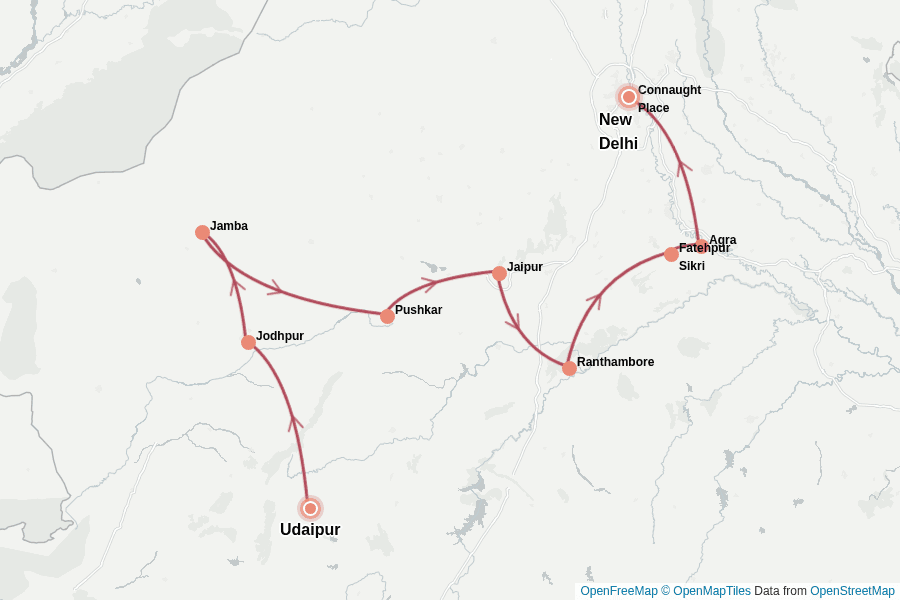
Two to three days is enough to take in the highlights without rushing. Many travellers use Delhi as the launchpad for the Golden Triangle with Agra and Jaipur, an ideal introduction to northern India.
Delhi caters to every budget. Entry to major monuments is inexpensive, though foreign-visitor tickets cost more than local ones. Street food and local restaurants are very affordable, while smart hotels and fine dining rise towards international prices.
As a rough guide, you can eat well for very little, and even mid-range comforts go a long way here compared with the UK. Carry small notes for rickshaws, tips and markets.
Delhi can feel overwhelming on a first visit, which is exactly why exploring it with a knowledgeable local guide transforms the experience. On our small-group India trips, you'll navigate the old city's lanes, decode its history and eat with confidence, all without the stress of logistics. Get in touch and let us open the door to India's captivating capital.
Contact us
We’d love to hear from you. Please fill out this form.
All fields marked with (*) are mandatory.
%3Aformat(webp)%2F1ddf6816-60c9-4412-9f83-24c14d506ea8-copy-of-karmaventrua-logo-1200px-full-color.png&w=1920&q=75)
%3Aformat(webp)%2Fimg%2F2048x1536%2F314602.jpg&w=1920&q=75)
%3Aformat(webp)%2Fprofile-picture%2Fb8394f09-f31c-406f-a7f6-8fb1e5cb7605-c5abd1bb-9529-4e6d-a3c9-70d76d7b22c0-A98F549B-D93F-4A84-BF5D-875FDB63DC48.jpg&w=1920&q=75)
%3Aformat(webp)%2Fprofile-picture%2Fbfaa800a-2fe3-4118-90d8-870f539efa55-c5abd1bb-9529-4e6d-a3c9-70d76d7b22c0-8F49F972-2F02-4EB1-821C-E41F00FB1DC0.jpg&w=1920&q=75)
%3Aformat(webp)%2Fprofile-picture%2F2d1f2429-a2b1-45f9-8faa-dc14c1279a8d-c5abd1bb-9529-4e6d-a3c9-70d76d7b22c0-A00A80C6-21C7-4278-9841-9598CC2EE083.jpg&w=1920&q=75)
%3Aformat(webp)%2Fprofile-picture%2F8505f132-25a7-4d22-8ae9-8c2fcbd5b5ea-c5abd1bb-9529-4e6d-a3c9-70d76d7b22c0-9C1D5D2A-B987-47B4-9D6B-6CA41408B5CF.jpg&w=1920&q=75)
%3Aformat(webp)%2Ftravel_report_photo%2F96991%2F01d0f7bf-2b64-4361-a2a1-97f6b43ea047-6F74A829-BC07-4B75-A463-5ED7C32DFCDA.jpeg&w=1920&q=75)
%3Aformat(webp)%2Fprofile-picture%2Fbc89e157-fec4-4067-ae77-e2029008878a-c5abd1bb-9529-4e6d-a3c9-70d76d7b22c0-5272E335-FC8C-465D-9B77-55CD73F8EF57.jpg&w=1920&q=75)
%3Aformat(webp)%2Fprofile-picture%2F084eff53-4bf9-4f0c-a8b6-e61962b287c3-c5abd1bb-9529-4e6d-a3c9-70d76d7b22c0-E09A1B85-A0FC-4DB4-9DF6-743DC77F3B3E.jpg&w=1920&q=75)
%3Aformat(webp)%2Fcsat%2Ff2b14524-7973-4de9-ac3f-5a36fd37dfdd-screenshot-2025-10-28-185321.png&w=1920&q=75)
%3Aformat(webp)%2Fheader_media%2Fdef512ae-3143-45c0-8725-af55551b750b-taj-mahal.jpg&w=1920&q=75)
%3Aformat(webp)%2Fpage_builder%2F3d982d30-a7b8-4996-b8e1-a1a84d6b0b58-result_pexels-rubenstein111rebello-15693783.jpg&w=1920&q=75)