%3Aformat(webp)%2Fdestination%2Fdfe2f360-c51b-4949-b9fe-699b07f8f539-nameri.jpg&w=1920&q=75)
Jaipur, the rose-pink capital of Rajasthan, is a feast for the senses: hilltop forts, honeycomb palaces, bustling bazaars and a royal history you can still see and touch. As the third point of India's Golden Triangle, it's many travellers' favourite stop, and with good reason. This guide covers the great forts and palaces, when to visit, and how to make the most of the Pink City.
Jaipur earned its nickname in 1876, when the old city was painted a warm terracotta pink to welcome the Prince of Wales; by tradition, pink signals hospitality. The colour has stayed ever since.
Founded in 1727, Jaipur was one of India's first planned cities, laid out on a precise grid. Wandering the walled old town, past its gateways and pink facades, you're walking through a piece of living royal history.
%3Aformat(webp)%2Ftrip%2F3ba19cd3-d8f6-4ac6-a1f9-541a5a604915-hawa-mahal-jaipur-india-wind-palace-small.jpg&w=1920&q=75)
Jaipur's forts are its crowning glory.
Allow a full morning for Amber Fort alone; its Sheesh Mahal (Mirror Palace) is unforgettable.
%3Aformat(webp)%2Fday_detail%2Fe019c7f9-5bbe-4111-a70a-886bf9ba32a5-pexels-preetam-priyabrat-2584620-4476397.jpg&w=1920&q=75)
In the heart of the old city, the City Palace remains the residence of Jaipur's royal family and houses museums of textiles, arms and art.
Next door, Jantar Mantar is a UNESCO-listed astronomical observatory of giant stone instruments that still keep time to this day. And no visit is complete without a photo of the Hawa Mahal, the five-storey 'Palace of the Winds', its lattice of 953 windows built so royal women could watch the street unseen.
%3Aformat(webp)%2Fday_detail%2F9b60fb32-6fc5-4646-a3e8-cc66eca973dc-pexels-axp-photography-500641970-19195940.jpg&w=1920&q=75)
Jaipur is one of India's great shopping cities, famous for gemstones, block-printed textiles, blue pottery and jewellery.
The old city's bazaars, including Johari Bazaar and Bapu Bazaar, are a riot of colour and craft. Haggling is expected and part of the fun. Take your time, compare prices, and consider visiting a workshop to see traditional artisans at work; a guide can help you find genuine quality and fair prices.
%3Aformat(webp)%2F2766344d-e16d-4e92-b94c-3bda76a28641-pexels-vijesh-vijayan-891485037-19867647.jpg&w=1920&q=75)
The best time to visit Jaipur is October to March, when days are warm and pleasant and nights are cool. December and January can be genuinely chilly after dark, so bring a layer.
Summers (April to June) are extremely hot, often above 40C, and the monsoon (July to September) is humid. If you can, time your visit for Diwali in autumn or the vibrant Elephant and Teej festivals, when the city is at its most festive.
Jaipur suits every budget, from heritage havelis and converted palaces to simple guesthouses. Monument entry is modest, and a combined ticket can cover several sites.
Tuk-tuks and app taxis make getting around easy; agree fares in advance. As always, prices for food, transport and crafts are very reasonable by UK standards, though the smartest palace hotels are a splurge well worth considering for a night of royal indulgence.
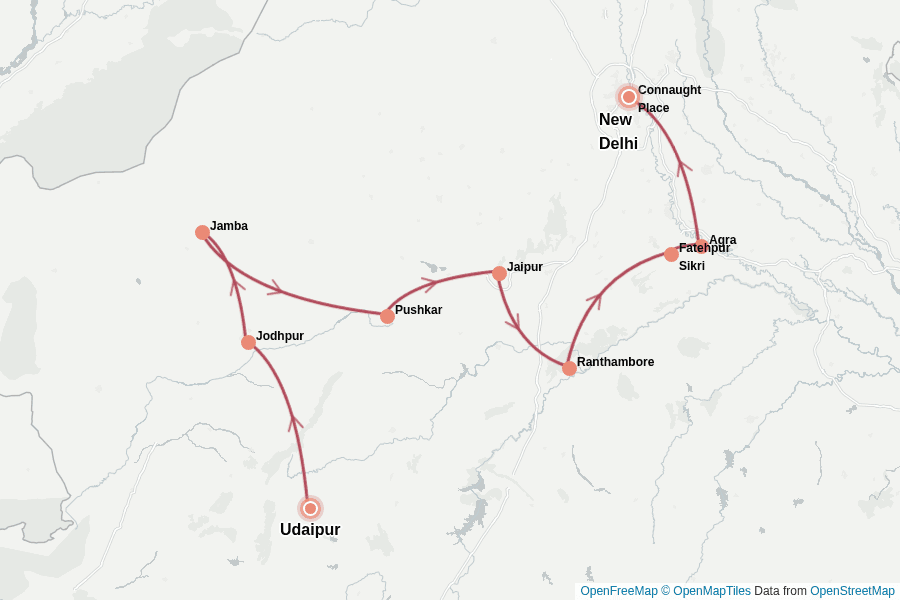
Jaipur's layers of history and craft come alive with someone who knows the city's stories, its finest artisans and the best moments to visit each fort. Our small-group India trips place Jaipur within a wider journey through Rajasthan and the Golden Triangle, with the logistics handled for you. Get in touch to start planning your Pink City adventure.
Contact us
We’d love to hear from you. Please fill out this form.
All fields marked with (*) are mandatory.
%3Aformat(webp)%2F1ddf6816-60c9-4412-9f83-24c14d506ea8-copy-of-karmaventrua-logo-1200px-full-color.png&w=1920&q=75)
%3Aformat(webp)%2Fimg%2F2048x1536%2F314602.jpg&w=1920&q=75)
%3Aformat(webp)%2Fprofile-picture%2Fb8394f09-f31c-406f-a7f6-8fb1e5cb7605-c5abd1bb-9529-4e6d-a3c9-70d76d7b22c0-A98F549B-D93F-4A84-BF5D-875FDB63DC48.jpg&w=1920&q=75)
%3Aformat(webp)%2Fprofile-picture%2Fbfaa800a-2fe3-4118-90d8-870f539efa55-c5abd1bb-9529-4e6d-a3c9-70d76d7b22c0-8F49F972-2F02-4EB1-821C-E41F00FB1DC0.jpg&w=1920&q=75)
%3Aformat(webp)%2Fprofile-picture%2F2d1f2429-a2b1-45f9-8faa-dc14c1279a8d-c5abd1bb-9529-4e6d-a3c9-70d76d7b22c0-A00A80C6-21C7-4278-9841-9598CC2EE083.jpg&w=1920&q=75)
%3Aformat(webp)%2Fprofile-picture%2F8505f132-25a7-4d22-8ae9-8c2fcbd5b5ea-c5abd1bb-9529-4e6d-a3c9-70d76d7b22c0-9C1D5D2A-B987-47B4-9D6B-6CA41408B5CF.jpg&w=1920&q=75)
%3Aformat(webp)%2Ftravel_report_photo%2F96991%2F01d0f7bf-2b64-4361-a2a1-97f6b43ea047-6F74A829-BC07-4B75-A463-5ED7C32DFCDA.jpeg&w=1920&q=75)
%3Aformat(webp)%2Fprofile-picture%2Fbc89e157-fec4-4067-ae77-e2029008878a-c5abd1bb-9529-4e6d-a3c9-70d76d7b22c0-5272E335-FC8C-465D-9B77-55CD73F8EF57.jpg&w=1920&q=75)
%3Aformat(webp)%2Fprofile-picture%2F084eff53-4bf9-4f0c-a8b6-e61962b287c3-c5abd1bb-9529-4e6d-a3c9-70d76d7b22c0-E09A1B85-A0FC-4DB4-9DF6-743DC77F3B3E.jpg&w=1920&q=75)
%3Aformat(webp)%2Fcsat%2Ff2b14524-7973-4de9-ac3f-5a36fd37dfdd-screenshot-2025-10-28-185321.png&w=1920&q=75)
%3Aformat(webp)%2Fheader_media%2Fdef512ae-3143-45c0-8725-af55551b750b-taj-mahal.jpg&w=1920&q=75)
%3Aformat(webp)%2Fpage_builder%2F3d982d30-a7b8-4996-b8e1-a1a84d6b0b58-result_pexels-rubenstein111rebello-15693783.jpg&w=1920&q=75)