%3Aformat(webp)%2Fday_detail%2F64d955cf-677c-4df3-a46d-8cc942e7c1fb-eshan-malaviarachchi-z3xo2b2db7q-unsplash.jpg&w=1920&q=75)
Walk the Ramparts of Resilience: Jaffna Fort — Sri Lanka’s Northern Bastion of Empire and Renewal
Stand on star-shaped ramparts where Dutch cannons once ruled the seas, and feel the weight of four centuries of ambition, trade, and survival in stone.
Information about Jaffna Fort
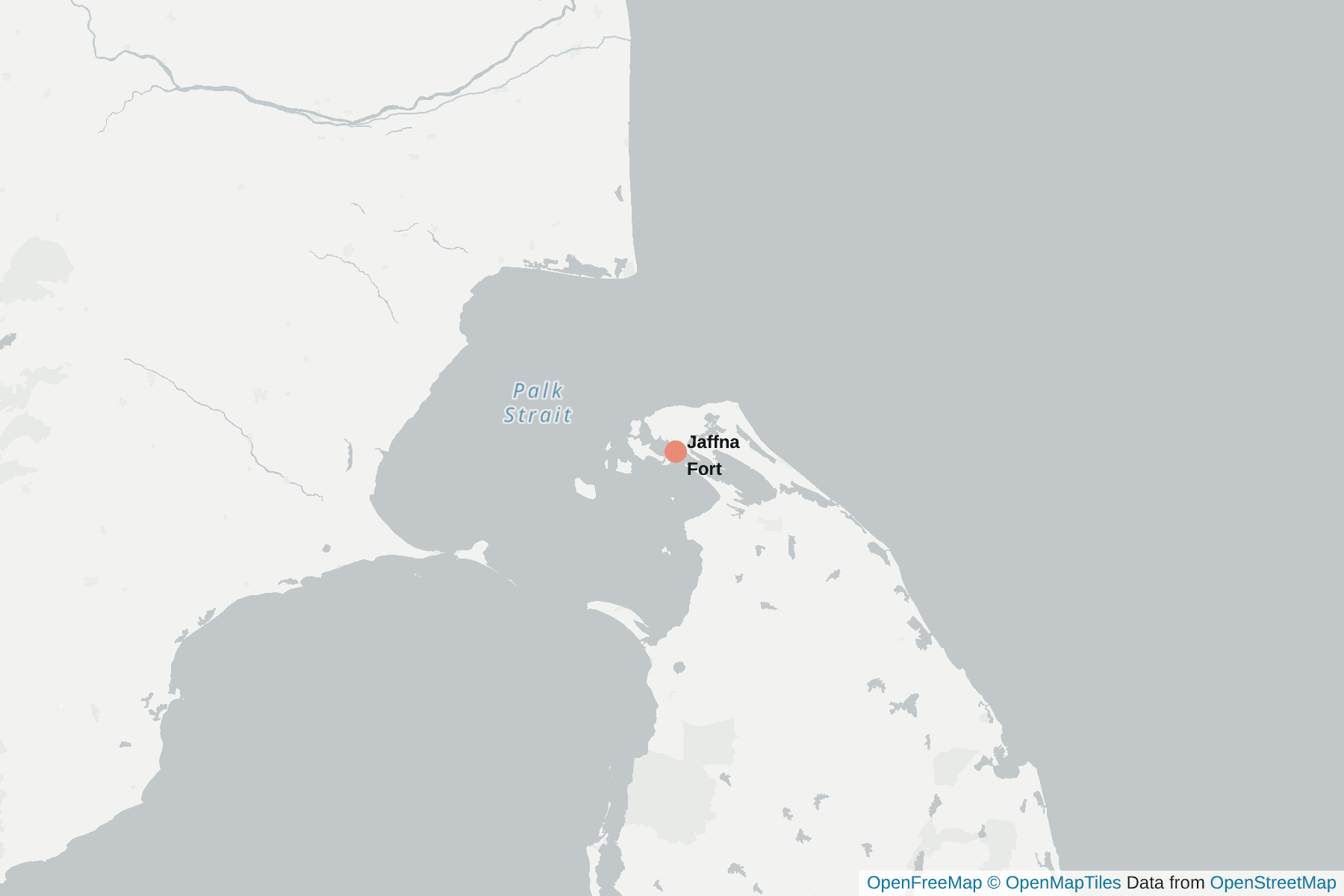
Guarding the cerulean waters of the Jaffna lagoon, the Jaffna Fort is a pentagon of coral stone and Dutch engineering — the second-largest colonial fort in Sri Lanka. Built originally by the Portuguese, then seized and expanded by the Dutch in the 17th century, it controlled the cinnamon trade and the narrow straits toward India. Walk the ramparts and gaze out over the lagoon, where fishing boats bob under the tropical sun. Though battered by decades of civil war, its walls still speak of resilience. What we like about Jaffna Fort is that it isn't just a relic — it's a monument to survival, and with Karmaventura, you stride through its gates feeling the sea breeze and the weight of history.
Interesting facts about Jaffna Fort
A star-shaped Dutch stronghold — Its pentagonal design was revolutionary for the 1600s, maximising cannon coverage against approaching ships.
Portuguese, then Dutch, then British — Captured, besieged, and swapped by three empires, the fort embodies Sri Lanka's layered colonial past.
Coral walls and cannonballs — The ramparts are made of coral stone, soft enough to absorb cannon fire without shattering — a clever defence.
A symbol of rebirth — Badly damaged in Sri Lanka's civil war, the fort was restored in recent years and now stands proud as a cultural landmark.
Où est Jaffna Fort
Possible Activities in Jaffna Fort

City tour
%3Aformat(webp)%2Fday_detail%2F7850f82d-d885-485e-95a0-400ac6b22690-3170478-jaffna-1771973.jpg&w=1920&q=75)
%3Aformat(webp)%2Fday_detail%2F3a8e4ec2-3f4b-440b-ac68-3c0679060a06-nawartha-nirmal-azmbs0kngq8-unsplash.jpg&w=1920&q=75)
%3Aformat(webp)%2Fheader_media%2F8d414860-9b80-41d3-aaba-86eb60f40f64-img_6928.jpeg&w=1920&q=75)